Since January 1, 2021, Hawaii has prohibited the sale of sunscreens containing oxybenzone and octinoxate — the two most common chemical UV filters — unless a prescription is involved, and the US Virgin Islands has gone further with its own ban on all three oxybenzone-type chemicals. For anyone paddling, snorkeling, or hiking a swim-access trail, that law is the clearest signal of where the science and the market are heading: two filters linked in laboratory studies to coral stress are on their way out, and reading a label now requires knowing what replaced them.
This guide explains the filters, the evidence, and the labels for trip planning. It publishes information, not medical or dermatological advice: sunscreen choice interacts with your skin type, health, and sun exposure, so make personal protection decisions with a healthcare professional. Rules also change — verify current sunscreen laws for your destination before you travel.
Why did Hawaii ban these sunscreens?
Because of laboratory evidence that oxybenzone and octinoxate can harm corals at elevated concentrations — studies cited in Hawaii's Act 104 described effects including coral bleaching and larval deformation at certain exposure levels — combined with the fact that swimmers wash sunscreen directly into reef waters at places like Hanauma Bay. NOAA's coral reef program summarizes the concern publicly: chemicals in some sunscreens can contribute to coral stress, though research on real-world reef concentrations continues. The law targets the product on the shelf, not the tourist — enforcement falls on retailers selling non-compliant sunscreen in-state.
Does that make mineral sunscreens reef-safe?
Mineral filters — zinc oxide and titanium dioxide — are the mainstream substitute and are permitted under the Hawaii ban, but the term reef-safe has no legal definition in the United States, so no label is a guarantee. What you can check: the ingredient list. A practical reading of the current landscape:
- Avoid: oxybenzone (benzophenone-3) and octinoxate (ethylhexyl methoxycinnamate) — banned in Hawaii and the US Virgin Islands; also watch octocrylene and homosalate, two other chemical filters under active regulatory review by the FDA.
- Prefer: zinc oxide and titanium dioxide in non-nanosome formulations, per the Hawaii law's own exemption text.
- Skepticism: the words reef-safe or reef-friendly on the front carry no certification requirement — the ingredient list is the only enforceable information.
What do paddlers and hikers actually wash into the water?
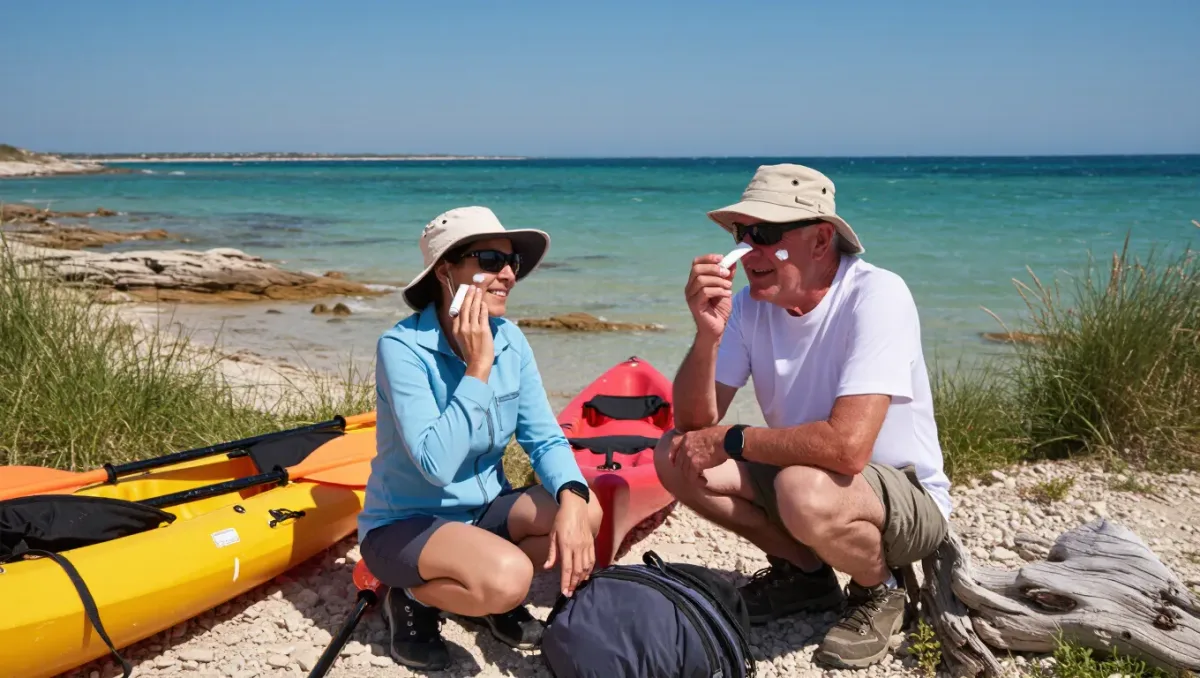
More than sunscreen. Insect repellent, body lotion, and medication residues ride along on the same swim, and clothing is the quiet alternative: a long-sleeve UPF-rated shirt, wide brim, and shaded lunch stop replace a large share of the lotion you would otherwise apply and re-apply. For waterside itineraries — a sea-kayak week, a canyon trip with swimming holes — the standard practice among guides is coverage by clothing first, mineral sunscreen second, applied 15 to 30 minutes before immersion so it binds rather than sloughs off.
Is sunscreen proven to be a major cause of reef decline?
No, and honest sources say so. Coral reefs face warming water, disease, pollution, and overfishing — NOAA and reef researchers consistently rank these as the dominant pressures, with sunscreen chemicals a localized contributor rather than the headline driver. The case for choosing mineral filters is precaution plus law: two jurisdictions have already acted, the chemistry is available in alternatives, and reefs at popular swim sites face concentrated exposure. You are not saving the ocean with one tube; you are not adding to a documented local stress either.
What should you pack for a trip to Hawaii or the US Virgin Islands?
Buy after you land or pack deliberately. Hawaiian retailers stock compliant products, so the simplest route is buying on-island — but selection narrows in small towns, so bring your own mineral sunscreen if you have a preference. Check the active-ingredients panel for zinc oxide or titanium dioxide, skip aerosols (they lose half the product to the air and are restricted on some beaches), and verify the current law for your destination — sunscreen legislation is active in several states and island jurisdictions as of 2026, and requirements evolve.