The working rule most US land agencies use is simple: stay far enough back that the animal does not change its behavior because of you — for large mammals like bears, wolves, and cougars, that means a minimum of about 100 yards (91 meters), and for most other large wildlife including deer, elk, and bison, about 25 yards (23 meters). Yellowstone National Park states both figures directly in its visitor guidance, and many parks and forests post similar numbers. If an animal stops feeding, stands alert, or moves away, you are already too close regardless of the tape measure.
This guide covers distance rules, optics, seasonal sensitivity, and food discipline for hikers and paddlers in North America. It is general etiquette and safety information, not a substitute for local rules: distances, closures, and food-storage orders vary by park, refuge, and season — always check with the managing agency before your trip.
Why do distance rules matter more than they look?
Wildlife runs on an energy budget. In winter, an elk or deer pushed to run burns fat reserves it needs to reach spring; in summer, a flushed ground-nesting bird leaves eggs exposed to heat, cold, and predators; a bear that gets food — even a forgotten granola bar — can become habituated and end up relocated or killed. The National Park Service's guidance is blunt on the outcome side: feeding or approaching wildlife is prohibited in national parks, and a habituated animal is often a dead animal. Distance is not about your comfort. It is about the animal not knowing you were there.
How close is too close, exactly?
Use the agency numbers as your floor, then add judgment:
| Animal | Minimum distance (typical NPS guidance) | What that looks like |
|---|---|---|
| Bears, wolves, cougars, bison | 100 yards / 91 m | Roughly a football field incl. end zones |
| Elk, deer, moose, bighorn sheep | 25 yards / 23 m | About two bus lengths |
| Nesting birds, marine mammals | Posted limits; often 50-100 yards | Check site-specific rules |
Seasonal closures tighten all of this. Calving and fawning areas, winter range, and raptor nests are closed to entry in many areas from late fall through spring — respect the signed boundary even if you can see no animals from the trail.
What gear lets you keep the distance and still see detail?
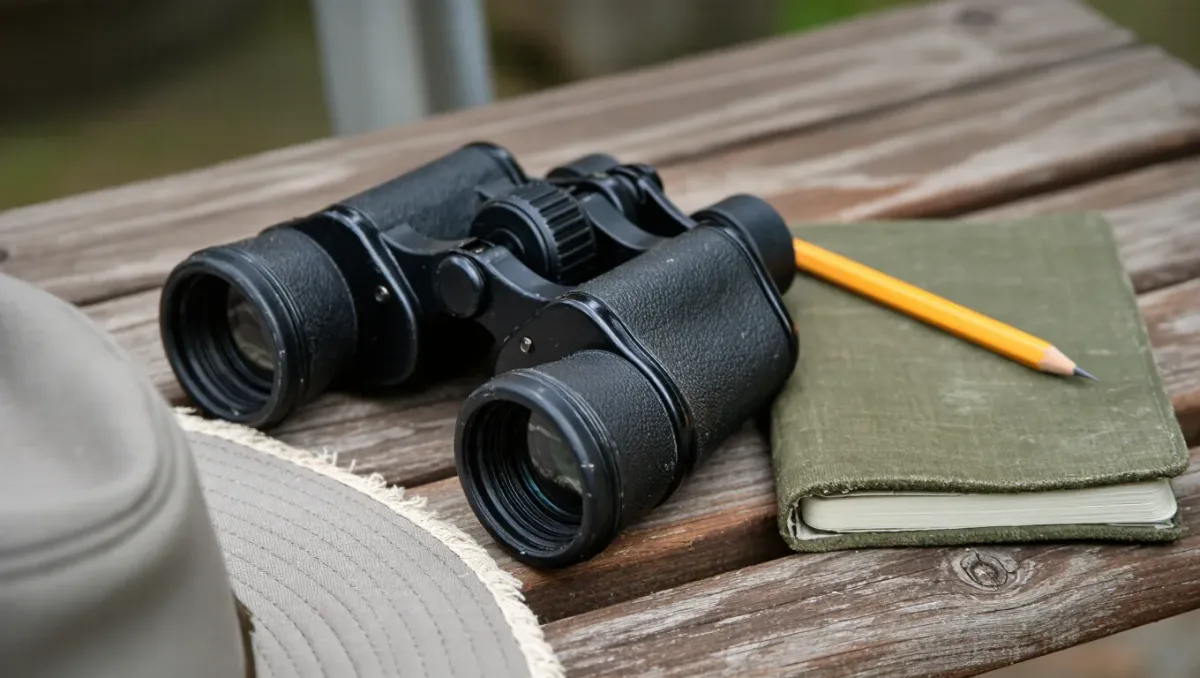
Optics, not proximity. Binoculars in the 8x32 to 10x42 range are the standard field choice — enough magnification to read an animal's behavior at 100 yards without the shake and narrow view of high magnification. A spotting scope on a light tripod earns its weight on shorelines, ridgelines, and overlooks where you glass for an hour. A camera with a telephoto lens (300 mm equivalent or longer) gets the shot the honest way. Field craft does the rest: move slowly and obliquely rather than straight at an animal, keep noise low, avoid bright scents, and let ridges and vegetation screen your approach.
What are the signs an animal is stressed by you?
Learn the tell and back off immediately when you see it: ears pinned or swiveling hard toward you, head raised high with a rigid stance, stamping or pawing, false charges, repeated looks while circling away, or birds giving sharp alarm calls and flush-flush-flush behavior off the nest. In bear country, a bear that stops feeding, stands, or clacks its jaws is communicating — follow the area's bear-safety protocol, give it an escape route, and leave. The rule of thumb used by wildlife agencies: if your presence changed the animal's behavior, the encounter already went too far.
How does food discipline fit into wildlife watching?
Totally — a fed animal is a disturbed animal. Store all food, trash, and scented items in approved canisters or lockers where required; many popular parks run mandatory food-storage orders in bear country. Never leave food for animals to "help" them, and keep crumb discipline at lunch stops. Check the current storage order for your area before you go; they vary by forest and park and by season.
What about marine life while paddling?
Same principle, different geometry. Keep a steady course and distance rather than approaching seals, sea lions, dolphins, or nesting shorebirds; many wildlife refuges and marine sanctuaries post specific standoff distances for kayaks and paddlecraft. Give haul-outs a wide, quiet berth — a paddler who triggers a mass flush of a seal colony has disturbed hundreds of animals in one move. Posted distances are enforceable federal rules in many sanctuaries, not suggestions.
What is the one-line summary for the trailhead?
Keep 25 yards from most large wildlife and 100 yards from predators and bison, let binoculars close the gap instead of your boots, back off at the first behavior change, and check the managing agency's current rules before you go — those four habits cover nearly every wildlife encounter you will ever have on foot or on the water.