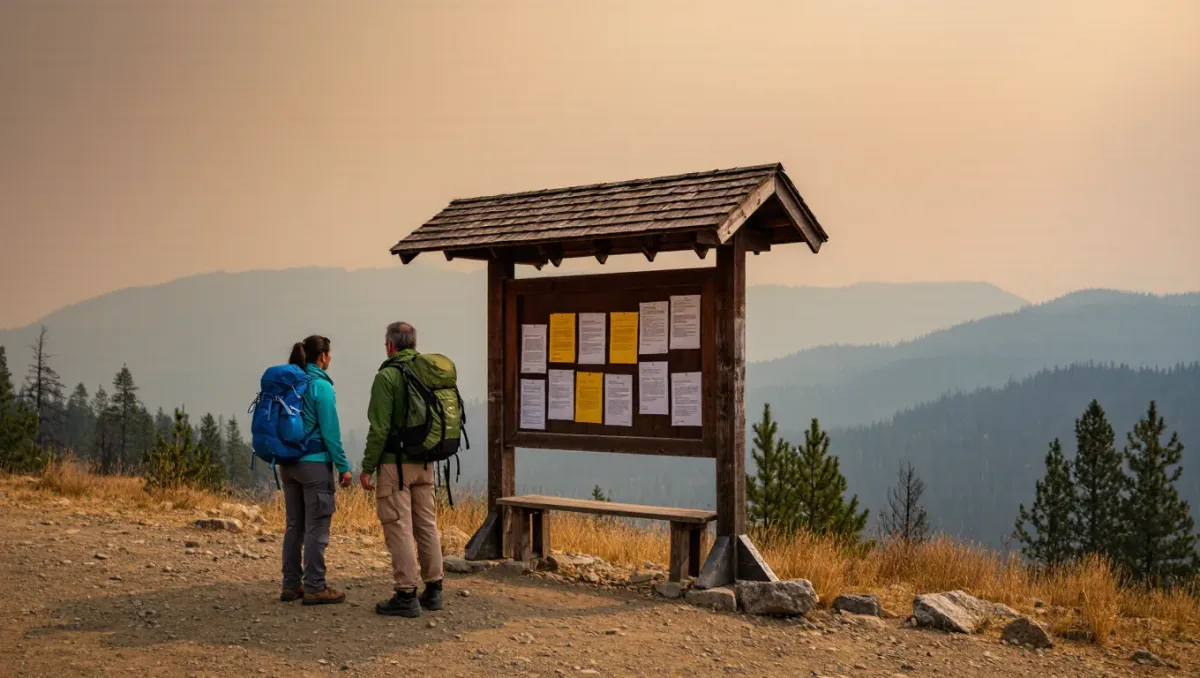
Wildfire-driven closures are already changing trip plans across the national park system in summer 2026: Theodore Roosevelt National Park closed the Painted Canyon Overlook to the public effective the evening of June 30, per the park, and Olympic National Park is managing partial trail closures around the Tom Creek Fire, which the park reported at 75 percent containment in July. Before you drive to any western trailhead this summer, checking two pages takes ten minutes and can save the trip.
This publication reports conditions as a planning discipline, not a forecast; fire perimeters and closures move daily, so the managing agency's own alerts — not a cached article — are the source of record.
Which parks and sites are already affected?
The early-summer 2026 list is a cross-section, not an anomaly. In North Dakota, Theodore Roosevelt's Painted Canyon Overlook — one of the park's most visited viewpoints — closed June 30 for park operations, per the park's announcement. In Washington, Olympic's Tom Creek Fire has left some meadow and ridge trails closed even as most of the park's trail network stays open, per the park's alerts page. Regional outlets have tallied fire-related closures across national forests and parks in the Northwest and Northern California through July. None of this is unusual for a July that followed a dry spring — which is precisely why the check-before-you-go routine matters more than any single closure headline.
How do you check a trail before a fire-season trip?
Work through the sources in order:
- The park's current conditions or alerts page — the managing agency's own list of closures, fire activity, and restrictions. For parks, that's the "Conditions" page on nps.gov; for forests, the forest's alerts page.
- Fire maps — the national incident mapping system shows active perimeters; a fire miles away can still close trails downwind or along evacuation corridors.
- Restriction orders — campfire bans and stage restrictions change what you can cook with; a stove-only rule is common by mid-July.
- Air quality forecasts — smoke can end a hiking day even where trails are open, particularly for the high-exertion climbs fire season overlaps.
How should you plan a trip that might burn?
Build the plan around reversibility: book refundable lodging where you can, hold a backup route in a different watershed, and print or offline-save maps in case a detour sends you to a trailhead without signal. If a closure hits mid-trip, respect it — closure lines protect both you and the fire crews working the area, and crossing them is both a safety gamble and a violation. Conditions change — check with the managing agency before you go.