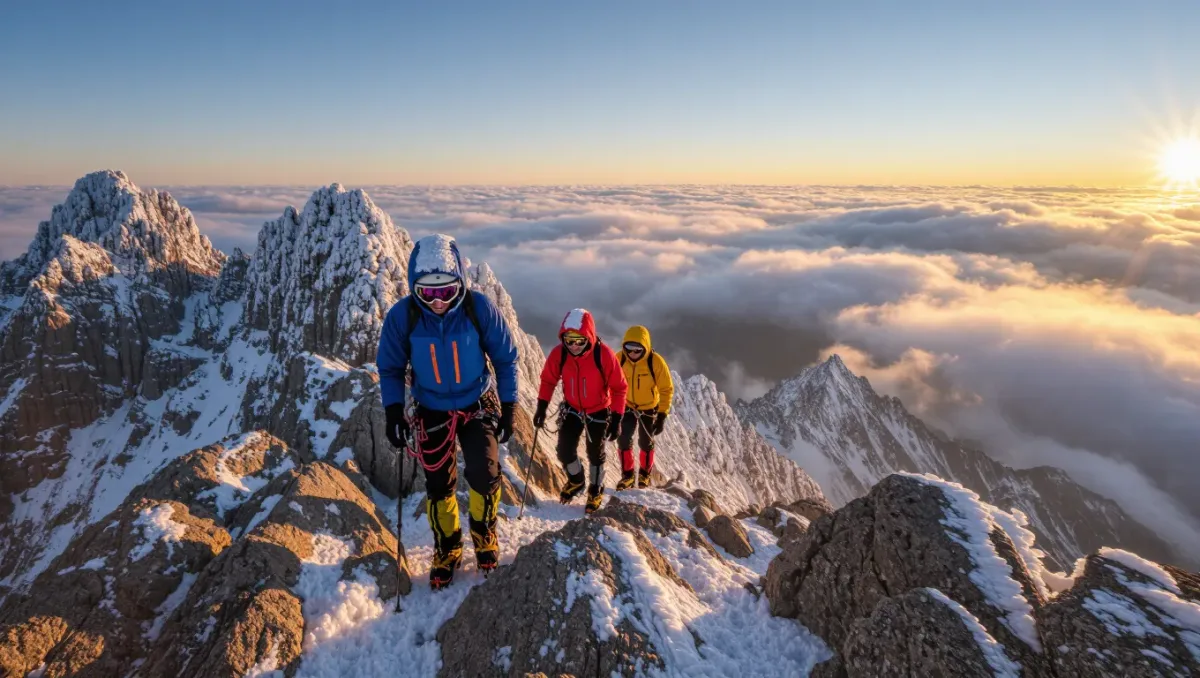
A winter ascent of Mount Washington is a full-day mountaineering objective: 6,288 feet, roughly 8.4 miles round trip and about 4,200 feet of gain on the standard Lion Head winter route from Pinkham Notch, per U.S. Forest Service route data. You need traction, an ice axe, insulated storm layers, and the judgment to turn around when the forecast turns — the summit has recorded surface weather since 1934, and the Mount Washington Observatory logged a 231 mph wind gust there in April 1934, still a benchmark for how bad it can get.
This guide covers route choice, gear, timing, and the weather decisions that separate a summit day from a search-and-rescue headline. It is planning information, not instruction: if you have never used crampons or self-arrested with an ice axe, take a winter skills course before you commit to the cone.
Why is Mount Washington a serious winter objective?
Because the mountain manufactures its own weather. The summit sits at the confluence of three major storm tracks, and its topography funnels wind through the Presidential Range. The Observatory's staff note that hurricane-force gusts occur on the summit dozens of days a year, and winter temperatures combined with wind push chill values far below zero Fahrenheit. Add short daylight — under nine hours around the December solstice — and the margin for error shrinks fast. The U.S. Forest Service's Snow Rangers, who staff the Mount Washington Avalanche Center, treat the mountain's winter routes as avalanche terrain, not a difficult hike.
Which route should winter climbers use?
Most winter ascents start from Pinkham Notch Visitor Center on Route 16 and take the Lion Head winter route. You climb the lower Tuckerman Ravine Trail to the Huntington Ravine trailhead fork, then trend left up the Lion Head winter route — a steep, sometimes heavily drifted climbing corridor through spruce and open slopes — before joining the summer Lion Head Trail above treeline and continuing over the Alpine Garden to the summit cone. The Forest Service marks and monitors this line precisely because the direct route through Tuckerman Ravine itself carries avalanche hazard.
Experienced parties sometimes climb the ravine routes in Huntington or the center of Tuckerman, but those are ice and snow climbs with real objective hazard and ratings assigned by guidebooks and the Avalanche Center, not beginner options. For a first winter ascent, the Lion Head line is the standard answer.
| Route | Round trip | Character | Best for |
|---|---|---|---|
| Lion Head winter route | About 8.4 miles | Steep treeline corridor, then exposed summit cone | Standard winter ascent, strong hikers with traction |
| Tuckerman Ravine Trail direct | About 8.6 miles | Crosses avalanche terrain in the ravine | Only in stable conditions; watch the avalanche forecast |
| Ammonoosuc Ravine + Crawford Path | About 9-10 miles | Longer approach from the west, Gem Pool start | Parties based near Twin Mountain avoiding Pinkham crowds |
| Huntington Ravine routes | Variable | Steep snow, ice, and rock; rated terrain | Technical climbers only |
What gear does a winter ascent require?
The Pinkham Notch trailhead board and the Avalanche Center's seasonal field checklist converge on the same list: insulated boots, crampons rated for technical snow and ice, an ice axe for the upper cone and self-arrest, a climbing helmet for the steep sections, and full storm protection — a wind shell with a helmet-compatible hood, insulated parka, heavy mittens, goggles, and a balaclava. Above treeline, exposed skin can freeze quickly when wind and temperature combine; carry a repair kit, headlamp with spare batteries, and enough food and insulation to sit out a deterioration in the weather.
Snowshoes are often necessary on the lower forest sections after fresh snow, and many parties switch between snowshoes, trail crampons, and full crampons several times in a day. Guide services in the valley rent the technical pieces and will tell you plainly: the cone is not the place to test gear you bought last week.
Do you need a permit to climb Mount Washington in winter?
No. The mountain sits in the White Mountain National Forest, and the Forest Service requires no climbing permit for a day ascent. Practicalities matter more: parking at the Appalachian Mountain Club's Pinkham Notch Visitor Center carries a day fee, the Auto Road and Cog Railway are closed to the public in winter, and overnight winter parking rules on Route 16 are enforced. Check the Forest Service's White Mountain National Forest alerts page before you drive, because road and trailhead conditions change through the season.
When is the best window, and when should you start?
December through March is the classic winter season, with February and March offering a balance of settled snowpack and lengthening days. Start from Pinkham Notch before dawn. Strong parties leave the lot between 4 and 6 a.m., both to buy daylight and to be off the exposed cone before afternoon winds build. If you cannot reach the treeline exit by mid-morning on a short winter day, the honest math says turn around. Build your plan around the daylight, not around the summit.
How do you deal with the weather and avalanche risk?
Check the Mount Washington Higher Summits Forecast from the Observatory and the daily avalanche forecast from the Mount Washington Avalanche Center the night before and again at the trailhead. The Avalanche Center rates avalanche danger on the standard five-point scale for the ravines and steep slopes, and its forecasts run through the snow season. Above treeline, set a hard turnaround: a specific time, or a specific wind and temperature floor, decided in the warmth of the car. The mountain will still be there in March.
The standing rule of the Whites: conditions change hour to hour — check the current avalanche and summit forecasts with the managing agencies before you go.
Trail facts
- Route: Lion Head winter route from Pinkham Notch Visitor Center, Route 16, NH
- Distance: about 8.4 miles round trip; about 4,200 feet of elevation gain (per U.S. Forest Service route descriptions)
- Difficulty: strenuous winter mountaineering; the upper route is rated avalanche terrain by the Mount Washington Avalanche Center
- Permit: none required for day climbs; parking fee at Pinkham Notch (fee current as of 2025)
- Season: December-March for full winter conditions; check avalanche forecasts daily
- Managing agency: U.S. Forest Service, White Mountain National Forest
- Conditions change — check current forecasts and alerts before you go
Frequently asked questions
Can a fit hiker do Mount Washington in winter without mountaineering experience?
No — and the Forest Service says as much in its winter safety guidance. The summit cone involves steep, windswept snow where a slip requires a self-arrest with an ice axe. Without practiced crampon and axe skills, a summer hiker is the person most likely to need rescue. Take a skills course or hire a guide for a first winter attempt.
How cold does it get on the summit?
Winter summit temperatures routinely sit below zero Fahrenheit, and combined with typical winds the Observatory's chill values fall far lower. Dress for the wind, not the parking-lot temperature, and carry an insulated parka even on a forecast bluebird day.
Is there water and shelter on the route?
No reliable water above Pinkham Notch in winter; streams are buried or frozen. Treat the day as self-supported. The Hermit Lake shelter area below Tuckerman Ravine serves as an emergency staging point, but plan to carry everything you need up and down.
How long does the round trip take?
Most parties take eight to twelve hours on the Lion Head route in winter, depending on snow conditions and group size. Confirm the daylight window for your date before setting an itinerary, and get an alpine start.