Community-based tourism means the people who live in the place you're visiting own the business. They host you, guide you, cook for you, and set the rules. The money you spend stays in the village instead of leaking out to a distant booking platform or a resort chain. The most important qualification: not every trip labeled "local" or "authentic" works this way, and the label alone proves nothing.
You'll recognize the real thing by a few structural signals. The accommodation is family-owned, often the host's own home. The guides were born where they're guiding. Profits fund something the community itself chose — a school roof, a trail crew, a water system. And the community can say no: to visitors, to group sizes, to certain trails. That veto power is the difference between a partnership and a performance. This connects to our earlier piece, Slow Travel: Why Fewer Stops Make Better Trips.
This piece walks through the main models, how the money actually flows, and how to book one without getting a rebranded package tour. It pairs well with our explainer on what ecotourism is and whether it actually helps, which covers the conservation side of the same question.
What does community-based tourism actually look like on the ground?
Most genuine operations fall into a handful of recurring shapes. Knowing the shapes helps you spot them in the wild, because operators rarely use the textbook terms.
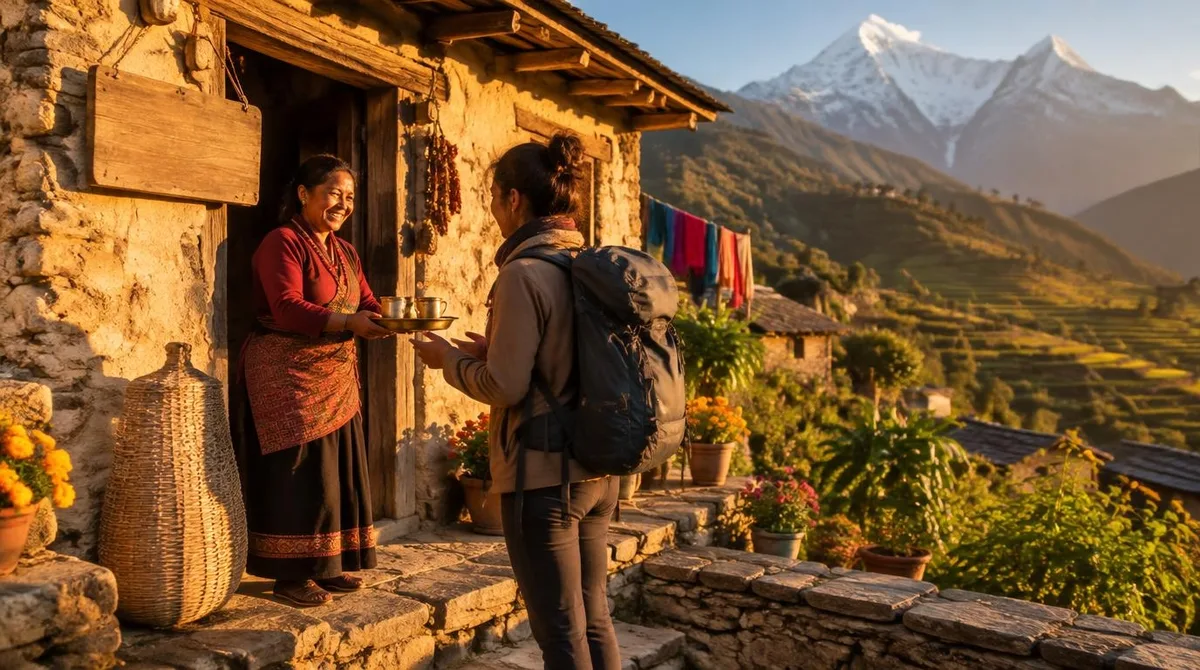
- Homestay networks. Families take turns hosting guests, often coordinated by a local association that rotates the bookings so income spreads across the village rather than pooling on one street. You sleep in a family home, eat what the family eats, and pay a rate the association set.
- Guide cooperatives. Local guides share ownership of the business. They set fees collectively, split bookings fairly, and reinvest a share into training or equipment. Because the guides are the owners, there's no outside operator skimming the margin.
- Community-run concessions. A village or Indigenous community holds the formal right to run tours, camping, or lodging on its own land, often under an agreement with a park agency or land trust. Visitors pay the community directly, and access rules come from the community, not a head office.
- Compound models. A lodge or trekking company is locally owned but hires from neighboring villages, sources food locally, and channels a defined share of revenue into a community fund. These can be genuine, but they deserve more scrutiny — the ownership question matters most.
The common thread is decision-making. In each model, the people hosting you also decide how tourism runs: when, how many guests, at what price, and what happens to the proceeds. Strip that out and you have employment, not ownership — a real but weaker thing.
Where does the money actually go?
Follow the payment, not the marketing. In a genuine homestay network, your fee splits roughly three ways: the host family's share, the association's coordination share, and a community fund contribution. In a cooperative, the guides' split is the business model. Ask two questions before you book: who owns this operation, and who decides how profits are used? A straight answer is a good sign. A brochure answer about "supporting local communities" is not.
Even city governments frame this work the same way. According to the City of Wilmington's Community Building Department, its work advances neighborhood stability through "community-based partnerships" and strategic local investment — language that shows how broadly the community-based idea now runs, from municipal housing programs to village tourism. The shared logic: decisions and benefits sit with the people who live there.
One honest caveat. Community-based tourism is not automatically cheap, and it is not automatically low-impact. Hosting visitors takes water, firewood, and waste capacity. A well-run operation manages those costs; a poorly run one simply moves the environmental bill onto the host community. That's why our guide to picking genuinely sustainable accommodations asks many of the same ownership and capacity questions.
How do you tell a genuine operation from a rebranded tour?
Greenwashing has reached village tourism. Some operators bolt "community" onto an ordinary package and call it done. Our piece on spotting greenwashing in eco-lodge certifications covers the certificate-chasing end; here, watch for these tells. For related coverage, see How to Spot Greenwashing in Eco-Lodges and Hotel Certifications.
- Ownership is vague. If no one can name who owns the business, assume an outsider does.
- The "community visit" is staged. A brief stop in a village, photographed and shopped through, is a tour stop — not community-based tourism. Real stays involve time, meals, and conversation on the community's terms.
- Prices are suspiciously low. If the rate can't plausibly pay a local guide a fair wage, the gap is being absorbed somewhere — usually by the hosts.
- There's no opt-out. Communities that genuinely control tourism can close it. Ask whether the community has ever limited or paused visits. A yes, with a reason, is a strong signal of real governance.
None of these checks requires insider knowledge. They require you to ask direct questions and listen to whether the answers are specific.
How should you book, step by step?
- Start with the local organization, not a platform. Look for a village tourism association, a cooperative's own site, or a regional tourism board page that lists community-owned operators. Book direct where you can.
- Ask the ownership question in writing. "Who owns this operation, and how are profits used?" Email it. The reply is your paper trail.
- Confirm what's included and what's expected. Meals, guiding, transport between villages, and any cultural etiquette — dress, gift-giving, photography rules. Good hosts tell you; great ones put it in writing.
- Pay in a way that reaches the community. Cash on arrival or a direct transfer beats a platform fee that shaves a cut before the money lands.
- Plan for slowness. These trips reward fewer stops and longer stays. Our case for slow travel explains why one village for four days beats four villages in one.
Conditions change — seasons, access rules, and even whether a community is hosting at all. Check with the local tourism association or managing agency before you go, the same way you'd check trail conditions.
What should you expect as a guest?
Expect less polish and more honesty. A family homestay may have a shared bathroom and a generator that switches off at ten. The payoff is the part no brochure can fake: you eat the region's food as the region cooks it, and your guide explains a landscape they grew up in. Come prepared to follow house rules, ask before photographing people, and accept that the schedule serves the community, not your itinerary.
Also expect to be one guest among few. Many community operations cap visitor numbers on purpose. That cap protects the experience and the place — the same logic behind the visitor-management questions in our overtourism explainer. If a community-based trip feels small and unhurried, that's the design working.
Our analysis: is it worth it?
Yes, with your eyes open. The evidence for community-based tourism is structural, not statistical: when locals own the operation, the revenue has nowhere else to go. When they don't, you're trusting a marketing claim. That's the whole test, and it's one you can run yourself with two questions and an email. What remains unknown in any given case is execution — whether a specific operation manages water, waste, and wages as well as it manages its story. Ask, book direct, stay longer, and treat the community's rules as the itinerary. Do that, and the trip gives back by design rather than by promise.