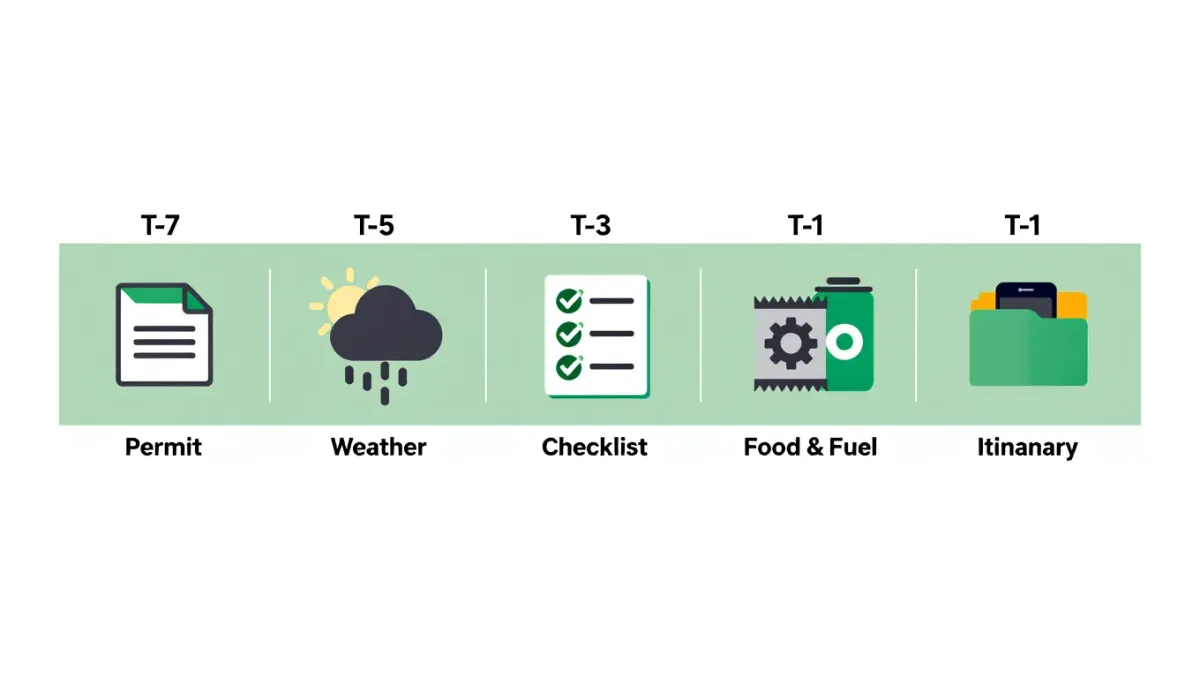
The final week before a trip has a fixed sequence: confirm access and permits seven days out, check the real weather forecast about five days out, shakedown gear and food three days out, and file your itinerary and transport plan the day before — because each step depends on the one before it, and every trip-ruining surprise, from a closed road to a missing stove, is cheap to fix at its own countdown day and expensive to fix later.
This checklist works for backpacking, hiking, and paddling trips of one to seven days. It is a planning template, not a substitute for local knowledge: conditions, closures, and rules change daily in busy backcountry, so re-verify with the managing agency at the countdown's end, not just its beginning.
What do you check seven days out?
Access and paperwork, which change on agency schedules rather than yours. Reconfirm every reservation and permit in your email and the booking platform — dates, gate codes, shuttle times. Call or check the ranger district or park page for current closures, fire restrictions, road status, and any new conditions notes; a fire in the next drainage is a seven-days-out problem when reroutes still exist and a same-day problem when they do not. Confirm your transportation chain end to end, including the return. If anything has changed, this is the week to change the plan — campsites cancel, alternate trailheads open up.
When does weather enter the checklist?
At five days out, then again daily. Point forecasts become genuinely useful about a week ahead and sharpen from there — check the National Weather Service forecast for your exact trail location, not the nearest town, and read the mountain-specific products where they exist: freeze levels, wind at ridgeline, thunderstorm timing in summer. The five-day check is a go/no-go on route choice; the day-before check is a go/no-go on the trip. For desert trips, heat is the hazard to plan around — schedule dawn starts — and for fire season, check current smoke and fire information for the whole region, not just the trail.
How does the gear shakedown work at three days?
Physical, complete, and by system. Lay out everything by category — shelter, sleep, kitchen, clothing, safety, navigation, repair — and check function, not presence: stove lights, filter flows at rated pressure, headlamp batteries fresh, first-aid kit restocked from last season, tent poles full, sleeping pad holds air overnight. Weigh the pack. Charge and load offline maps onto phone and any backup device, and put fresh paper maps in the lid. Test whatever you have not used since last year — the gear that fails on trips is almost always gear that was never unpacked at home.
What happens at two days and one day out?
Food, then filing. Two days out: final food shop against your per-day menu, fuel check against your boil count, and meal prep — dehydrated portions bagged by day, first day's lunch accessible. One day out: pack the car or confirm tickets, set alarms for a start time that beats the parking problem, and file your itinerary — route, party, vehicle, and a check-in time — with a responsible contact who knows who to call if you are late. Check the forecast again, print or save the agency's current conditions page, and set out the trailhead essentials: passes, permits, parking confirmation.
What does the morning-of routine cover?
Verification, not packing. A final conditions check with the agency's alerts page or ranger line — overnight lightning, early closures, and trailhead parking status can all change while you sleep. Confirm your contact has the itinerary and your expected check-in. Then start early: the checklist exists to buy you the early start that makes everything else on the trail more forgiving.
What is the countdown in one line?
Seven: access, permits, closures. Five: real forecast, route go/no-go. Three: shakedown by system, maps offline. Two: food and fuel. One: itinerary filed, pack in the car, forecast rechecked. Morning: alerts, contact confirmed, early start. Rules and conditions change right up to the trailhead — check with the managing agency one last time before you go, and the checklist has done its job.