The United States runs a five-month wildflower season, and you can hike six of its best windows in one year: desert blooms in the Southwest as early as February, Texas bluebonnets and California poppies in March and April, the Smokies' trillium slopes in April, Shenandoah's crest in May, and — the long finale — Mount Rainier's subalpine meadows in late July and August, with peak timing each year set by snowpack and weather, per the managing agencies' bloom updates. The trick to catching any of them is the same: watch the agency's bloom reports, not the calendar, because elevation and winter rainfall move the peak by weeks.
This guide lists each destination with its typical window, its headline trails, and the etiquette that keeps the show coming back. Bloom windows below are the ranges the managing agencies and state parks publish; any given year runs early, late, or sparse — the reports are the authority, and this is planning information, not a bloom forecast.
Where does the season start first?
In the deserts. Joshua Tree National Park and the Sonoran-influenced low deserts typically show their first annuals from late February through March when winter rains cooperate, per National Park Service wildflower information, with ocotillo, desert dandelions, and lupine painting open flats between the Joshua trees. The desert bloom is famously variable — superbloom years draw crowds and sparse years draw flowers only in sheltered draws — and the honest play is to pick a couple of short trails, walk early, and treat any bloom at all as a bonus rather than a guarantee.
What about the famous March-April shows?
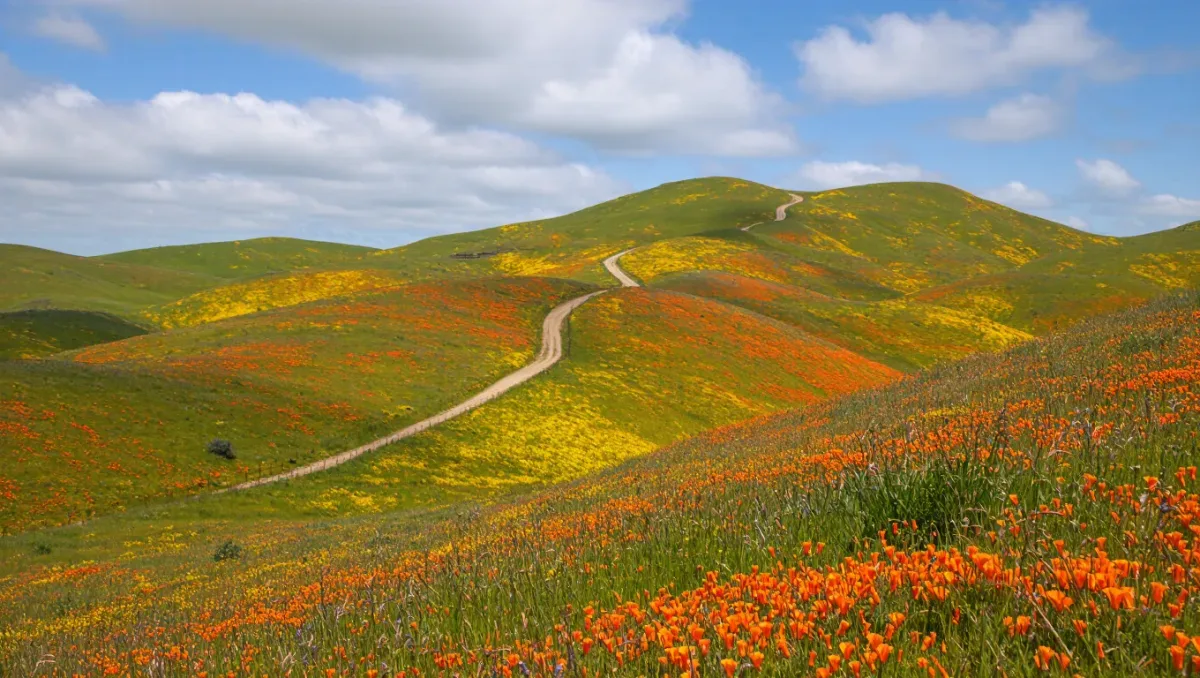
Two anchor destinations. California's Antelope Valley California Poppy Reserve, managed by California State Parks, usually runs its orange season from mid-March into late April, per the park's published bloom updates, with rolling trails through poppy fields where flowers close at night and on gray days — go mid-morning to mid-afternoon for open blooms. Texas Hill Country bluebonnets typically peak late March through April across roadside fields and state parks, per Texas parks and tourism reporting; pick an official park trail rather than a highway shoulder, both for safety and because picking or trampling the state flower is exactly the etiquette failure it sounds like.
| Destination | Typical bloom window | Headline flowers | Managing agency |
|---|---|---|---|
| Joshua Tree NP, California | February-March | Desert annuals, ocotillo, lupine | National Park Service |
| Antelope Valley Poppy Reserve, California | Mid-March-late April | California poppies | California State Parks |
| Texas Hill Country | Late March-April | Bluebonnets, paintbrush | State parks and local agencies |
| Great Smoky Mountains NP | April-May | Trillium, phacelia, lady's slipper | National Park Service |
| Shenandoah NP, Virginia | April-May, crest into June | Wild azalea, laurel, orchids | National Park Service |
| Mount Rainier NP, Washington | Late July-August | Lupine, paintbrush, avalanche lily | National Park Service |
Why do the Smokies headline the Appalachian spring?
Because the park carries what its own wildflower pages describe as one of the most diverse flowering-plant floras in the national park system — well over a thousand flowering species — and spring stacks it in waves: trillium, fire pink, and phacelia on the lower slopes from April, moving upward into May. The park's long-running spring wildflower program has anchored the season for decades, and low-elevation trails near park headquarters deliver dense displays within the first miles. Mist and rain are part of the package; the flowers do not mind and neither should your rain shell.
When does spring finally reach the high country?
In July — which is the point. At Mount Rainier, the subalpine meadows of Paradise and Sunrise hold snow into midsummer, then run the most concentrated wildflower display in the national park system from late July into August, per the park's published season guidance, with lupine, paintbrush, and avalanche lily under the mountain. The same elevation logic works at other high parks: wherever spring arrives last, the bloom arrives last. The rules there are strict because the meadows are fragile — boardwalks and designated trails only, and never cut a switchback through a meadow no matter how photogenic the line.
How do you photograph flowers without wrecking them?
Stay on the trail and shoot from there. Every agency's wildflower etiquette lands on the same list: do not trample surrounding plants for an angle, do not pick, leave rocks and bark where they lie, and give other photographers and the flowers room. Get low instead of stepping in — kneeling at the trail's edge with a long lens beats a boot print in the bloom, and the Leave No Trace habit of taking only pictures has rarely had a better subject.
Bloom timing moves with elevation, snowpack, and rain every single year — check the managing agency's current bloom report shortly before you go.
Frequently asked questions
When is peak wildflower season in the US?
There is no single peak — the season rolls from February desert blooms through April-May mountain hollows to late-July alpine meadows, per the agencies' published bloom windows. Follow the bloom reports and you can hike six different peaks in one year.
What makes a superbloom year?
Typically a wet autumn and winter following a dry year, which clears competition and loads the seed bank, per the explanations state parks publish for California poppy country. Superblooms are unpredictable, and chasing them means watching the reports weekly once rains start.
Can you pick wildflowers on national park trails?
No. Picking is prohibited in national parks, and state park rules are similarly strict, per agency regulations. Photograph, kneel, and leave everything growing where it stands.