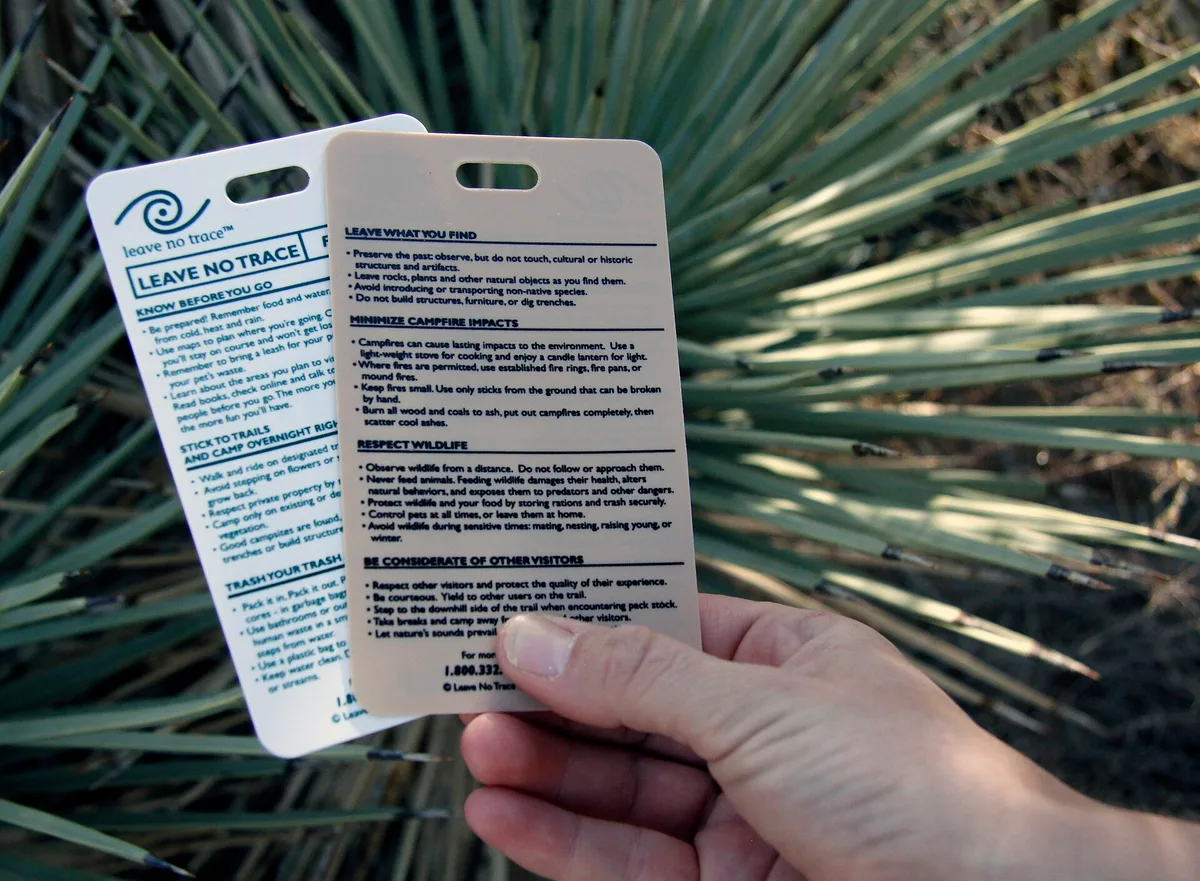
The Leave No Trace seven principles work as a checklist of real decisions, not a set of slogans. Each one changes what you do at the trailhead, on the trail, or at camp. Two examples from the National Park Service's own guidance: camp at least 200 feet from lakes and streams, and dig catholes 6 to 8 inches deep.
The framework took shape through land agencies in the 1980s and was finalized at seven principles in 1999 and has not changed since. Here is what each principle asks of you in practice.
Why Does Planning Come First?
Most impact gets decided before you leave home. The National Park Service's Leave No Trace guidance starts with the regulations and special concerns for the area you plan to visit, then weather, hazards, and timing. The pressure is not new: the program's history counts park visitation jumping from 33 million in 1950 to 172 million in 1970, and crowded seasons still concentrate wear on the same valleys.
Run the principle as questions. Do you need a permit? Is the road open? Where will you sleep if the campground fills?
What Counts as a Durable Surface?
Maintained trails, designated campsites, rock, gravel, sand, dry grasses, and snow all take use without lasting damage. The park service adds a number: camp at least 200 feet from lakes and streams, because shore vegetation does heavy ecological work. In busy areas, stay on the trail single file even when it is muddy. "Good campsites are found, not made," the agency notes. For related coverage, see Avalanche Basics Every Winter Hiker Should Know Before Steep Snow.
Where Does Your Waste Actually Go?
Pack it in, pack it out covers more than wrappers. Leftover food and litter leave with you. Where toilets exist, use them. Where they do not, dig catholes 6 to 8 inches deep and at least 200 feet from water, camp, and trails, then cover and disguise them. Pack out toilet paper and hygiene products rather than burying them. Wash dishes 200 feet from the source, with small amounts of biodegradable soap, and scatter the strained water. We covered a connected angle in Trail Right of Way Rules: Who Yields to Whom on Shared Trails.
What Does Leave What You Find Cover?
Artifacts, plants, and rock all stay put. Examine and photograph cultural or historic structures, but do not touch them, and leave natural objects where they lie. The rule also runs forward: clean boots and gear so invasive seeds do not hitch a ride, and skip the urge to build furniture or dig trenches at camp.
How Small Should a Campfire Be?
Smaller than instinct suggests. A lightweight stove handles cooking, and it leaves nothing behind. Where fires are permitted, use an established fire ring and burn only down, dead wood from the ground that breaks by hand. Burn everything to ash, drown the fire completely, then scatter cool ashes. In dry seasons a total fire ban is common, so check it when you check the forecast.
What Does Respect Wildlife Require?
Distance, mostly. Watch animals from far off, never follow them, and never feed them, because feeding damages their health and rewrites their behavior around people. Store food and trash securely so a lesson never gets taught. Keep pets controlled or at home, and give wildlife extra space during mating, nesting, and winter, when energy budgets are thinnest.
How Do You Share the Trail?
Courtesy is the seventh principle. Yield to other users, step to the downhill side when pack stock passes, and take breaks away from the path. Loud voices carry a mile across a lake, so let the place set the volume. None of it costs you anything, and it protects the quiet people came for.
Conclusion: A Framework You Can Run Anywhere
The seven principles hold together because each one answers a decision you actually face: where to walk, where to camp, what to carry out, what to touch, whether to burn, how to watch, how to share. Run them in order and most mistakes never happen. Regulations vary by area and season, so read the managing agency's rules before you go.
- Framework: seven principles, finalized in 1999 and unchanged since (Wikipedia, checked October 2026)
- Campsites: at least 200 feet from lakes and streams (NPS guidance, updated June 2022)
- Catholes: 6 to 8 inches deep, 200 feet from water, camp, and trails (NPS)
- Fires: established rings only where permitted, dead wood that breaks by hand (NPS)
- Wildlife: never feed; store food and trash securely (NPS)
- Conditions change — check before you go