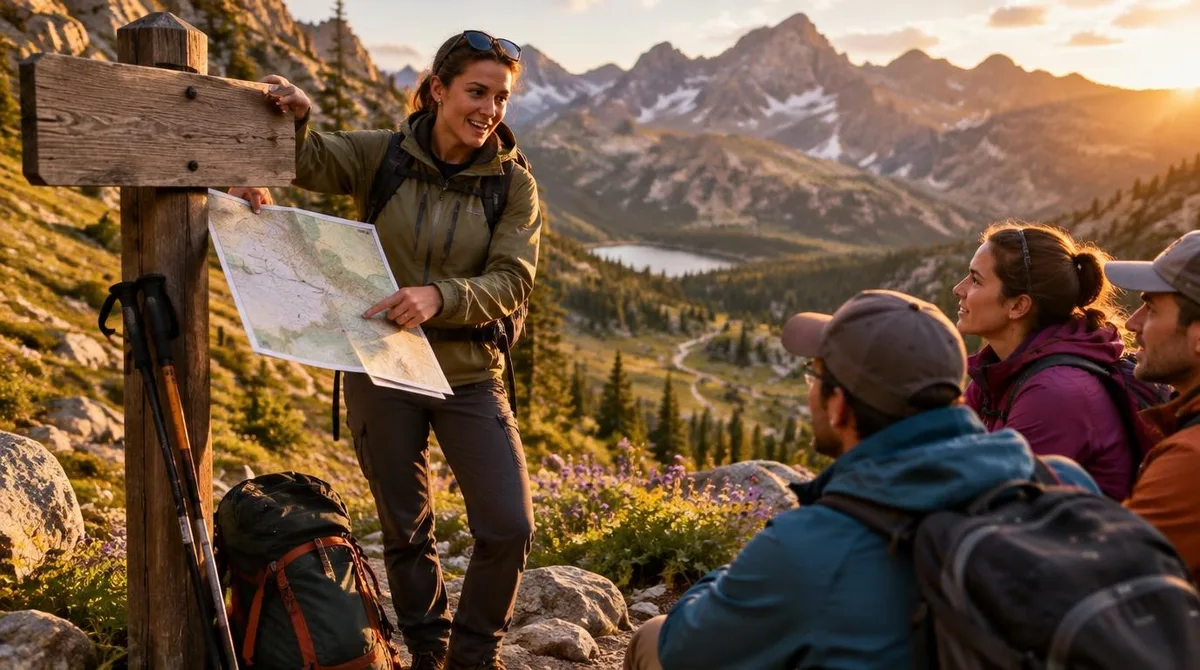
The best adventure jobs that pay you to travel fall into three broad families: guiding work, conservation and trail labor, and seasonal hospitality or support roles built around outdoor destinations. They differ less in glamour than in how they pay, how long the season runs, and how hard the front door is to get through. The right one for you depends on which of those three you can afford to compromise on.
It is worth being precise about the word at the top of any ranking like this. According to WordReference's dictionary entry, "best" is the superlative of "good" and means most suitable or of greatest advantage — which is the honest framing here. There is no single best job, only the one whose trade-offs suit your savings, your fitness, and your tolerance for living out of a duffel.
One warning before the list: pay figures in this field swing wildly by country, employer, and season, and this piece deliberately avoids quoting numbers it cannot verify. Treat any salary you see online as a starting question for the employer, not an answer. Conditions change — check directly with the operator, agency, or program before you commit to anything.
What kinds of jobs actually pay you to be outdoors?
Most paid outdoor work clusters into a handful of recognizable types. Expedition and trekking guides lead clients on multi-day routes. Raft and kayak guides run rivers. Ski and snowboard instructors work winter resorts. Trail crew members and conservation corps members build and maintain paths for land agencies or nonprofits. Outdoor educators teach navigation, climbing, and group leadership, often at centers or schools. Around all of these sit the support jobs: hostel and lodge staff, shuttle drivers, camp cooks, and gear-shop staff in gateway towns.
The difference between the first group and the second matters more than it looks. Guiding puts you in the field with clients and usually requires certifications. Trail and conservation work puts you in the field with a crew and often requires only fitness and a work ethic. Support jobs put you near the outdoors rather than in it, but they are the easiest doors to open and they keep you in a destination town all season.
Which jobs are easiest to start with no experience?
Support roles win this category by a wide margin. Hostels, lodges, campgrounds, and rafting companies hire seasonal staff every year for housekeeping, kitchen, front desk, and driver work, and most hire for attitude and availability rather than résumés. If you have a clean driving record and flexible dates, you are already a plausible candidate.
Trail crews and conservation corps are the next rung. These programs generally provide the training on the job; what they screen for is the ability to do hard physical work in bad weather for long stretches. If you want to know whether your body is ready for that kind of season, our guide to training for a multi-day backpacking trip covers the same fitness base most crews expect. This connects to our earlier piece, How to Train for a Multi-Day Backpacking Trip: An 8-Week Plan.
Guiding sits at the top of the entry barrier. River guides usually need a swiftwater or first-aid credential and a training season before they take commercial trips. Trekking and mountain guiding demand more still, and the certification path can take years. The trade is that experienced guides can eventually work anywhere in the world a route exists.
How does pay and seasonality differ across these paths?
Think of the field as a spectrum rather than a ranking. At one end are the support jobs: modest pay, but long seasons and low entry barriers, which makes them the most reliable way to fund a life in a destination town. In the middle sit trail and conservation crews, which often include housing or food on top of wages and run a defined field season. At the other end is guiding, where top-certified guides can earn the most per day but the work is intensely seasonal and often depends on tips and repeat clients.
Seasonality shapes everything. Ski towns hire in winter and go quiet in the shoulder seasons. River towns flip that. Trekking regions often have one or two windows a year when the work exists at all. Many people in this field deliberately stack two opposite seasons — a winter at a resort, a summer on a river — to build a full year. That is the real financial skill in outdoor work: not earning more per hour, but staying employable across the calendar.
What certifications and skills do you actually need?
It depends entirely on the job, and this is where generic advice does the most damage. First aid training is the near-universal baseline for anything client-facing, and most employers will tell you exactly which credential they require — ask them, and verify with the certifying body. Beyond that, requirements branch fast: swiftwater rescue for river work, avalanche education for winter guiding, formal guide certification for many trekking and mountain roles.
Two habits will serve you better than any single certificate. First, read the employer's own job postings and training documents rather than forum summaries, because requirements vary by country and operator. Second, understand what the job actually involves before you chase it. If you are drawn to guiding, our breakdown of what guide fees actually cover explains the economics on the client side, which mirror the economics on the guide side. And if you end up choosing between operators to work for, the same diligence readers apply to choosing a reputable trekking operator applies in reverse — you are vetting an employer.
What this means for how you should choose
Our analysis, reading the structure of the field rather than any single listing: pick your constraint first. If you need income now and have no certifications, start with a support role or a conservation crew and treat the first season as paid reconnaissance. If you already have skills — on a river, on snow, on a rope — target the guiding path and budget for the training it demands. If you want the outdoors as a backdrop rather than a workplace, the destination-town jobs deliver that with the least risk.
Whatever you choose, verify three things before you sign anything: the season dates in writing, what housing and food the employer actually provides, and which certifications they will train versus which they expect you to arrive with. Employers in this field range from excellent to exploitative, and the difference usually shows up in exactly those three lines.
The bottom line for planning your first season
Adventure work rewards people who plan like trip planners. Choose a job type that matches your current certifications, not your ambitions for next year. Stack complementary seasons to cover the calendar. Ask employers direct questions about pay structure, housing, and training, and treat vague answers as data. And keep the standing caveat in view: hiring windows, credential requirements, and program structures all change — check with the specific employer, agency, or program before you apply, because the details you confirm today are the ones that determine whether the season works.