Rivers are ranked for rafting on one shared scale, and it runs from Class 1 to Class 6. The international scale of river difficulty, created by the American Whitewater Association, sorts any stretch of water into six classes, and a first trip belongs on Class 2 or 3 water with a licensed outfitter, per Wikipedia's overview of the system.
The number is a starting point, not a verdict. Per the system's own notes, the scale is not linear and not fixed, and many rivers carry a plus or minus to mark where a run sits in its band. Levels move ratings too. Check the gauge before you commit, and check with the managing agency before you go. We covered a connected angle in What to Know Before You Paddle the Buffalo National River.
What Is the International Scale of River Difficulty?
It is an American system for rating how hard it is to navigate a stretch of river or a single rapid, created by the American Whitewater Association to evaluate rivers worldwide, per Wikipedia's overview. Rafting, riverboarding, whitewater canoeing, stand up paddleboarding, and kayaking all borrow it, so the Class 3 you raft today is the Class 3 a kayaker scopes tomorrow. The grade reflects the technical difficulty and the skill level a section demands.
What Do Classes 1 to 3 Feel Like?
Class 1 means very small rough areas that require no maneuvering, a float where the banks do the entertaining. Class 2 adds some rough water, maybe some rocks, and small drops that might require maneuvering, the entry point most outfitters set for first trips. Class 3 is where water reads as real whitewater: medium waves, maybe a 3 to 5 foot drop, and maneuvering that can turn significant, per Wikipedia's whitewater guide, which pegs the skill level at experienced paddling.
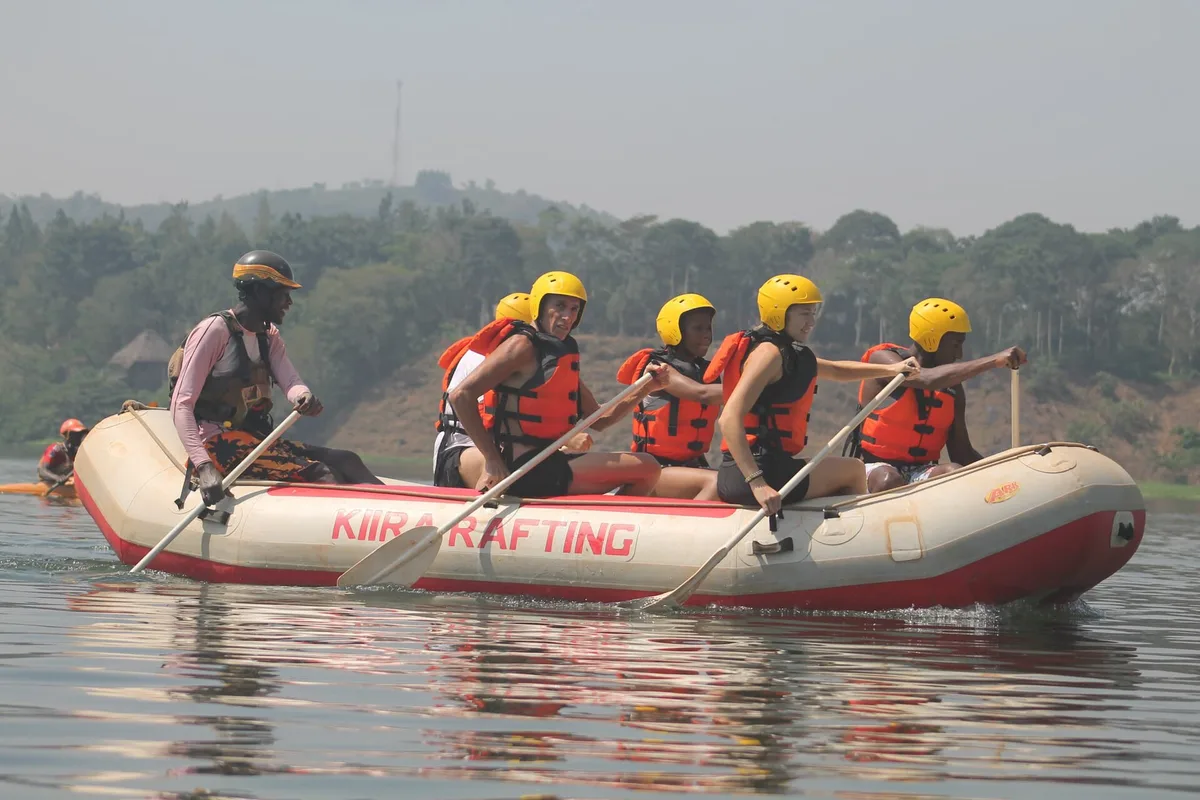
On a commercial Class 3 run you paddle hard on command, the guide calls the line, and the boat handles the rest. A licensed trip wraps hard water in gear, briefings, and local knowledge. For related coverage, see What Guide Fees Actually Cover: Breaking Down the Line Items on a Guided Expedition.
What Do Classes 4 to 6 Demand?
Class 4 brings whitewater, large waves, long rapids, and drops that may need sharp maneuvers, with advanced whitewater experience listed as the skill level. Class 5 is the expert band: continuous rapids, large hazards, precise maneuvering, and must-make moves where a miss can mean serious injury, per the same source. Class 6 describes rapids considered not passable, where an attempt carries considerable risk of serious injury or death. When a once-impossible rapid gets run cleanly, it is typically reclassified to Class 5.
West Virginia's Gauley River shows how a land agency applies the numbers. Per the park's whitewater page, the upper Gauley offers class III to V+ drops in steep, turbulent chutes and requires experience plus a minimum age of 16, while the lower Gauley is a 12-mile stretch rated class III to V with a minimum age of 12 to 14.
How Do You Pick the Right Grade for Your First Trip?
Start below what sounds boring, then work up. The Gauley shows the stakes behind the numbers: the river drops more than 668 feet through 25 miles and stacks more than 100 rapids, drawing over 60,000 adventurers a year, per the park. Gauley Season runs six weekends starting the first weekend after Labor Day, and for 2026 the US Army Corps of Engineers plans Summersville releases on September 11-14, 18-21, 25-28, and October 2-5, 9-12, and 17-18.
- 1. Book a Class 2 or 3 commercial trip with a licensed outfitter for run one
- 2. Read age and fitness minimums before you pay; the park posts them per section
- 3. Check the gauge or release schedule the day before, since levels move ratings
- 4. Save Class 4 water for when guided Class 3 runs feel routine
Conclusion: Read the Number, Then Read the River
The class tells you which skills the water demands; the gauge decides how it feels that day. Put the two together with the agency's own page, and the trip is planned before you reach the put-in.
- System: international scale of river difficulty, six classes, created by the American Whitewater Association (Wikipedia, checked October 2026)
- Class 1 to 3: small rough water to medium waves; Class 3 may include a 3 to 5 foot drop (Wikipedia)
- Class 4 to 6: advanced to expert; Class 6 treated as not passable (Wikipedia)
- Worked example: upper Gauley class III to V+, minimum age 16; lower Gauley 12 miles, class III to V (NPS, 2026)
- Conditions change — check flows with the managing agency before you go