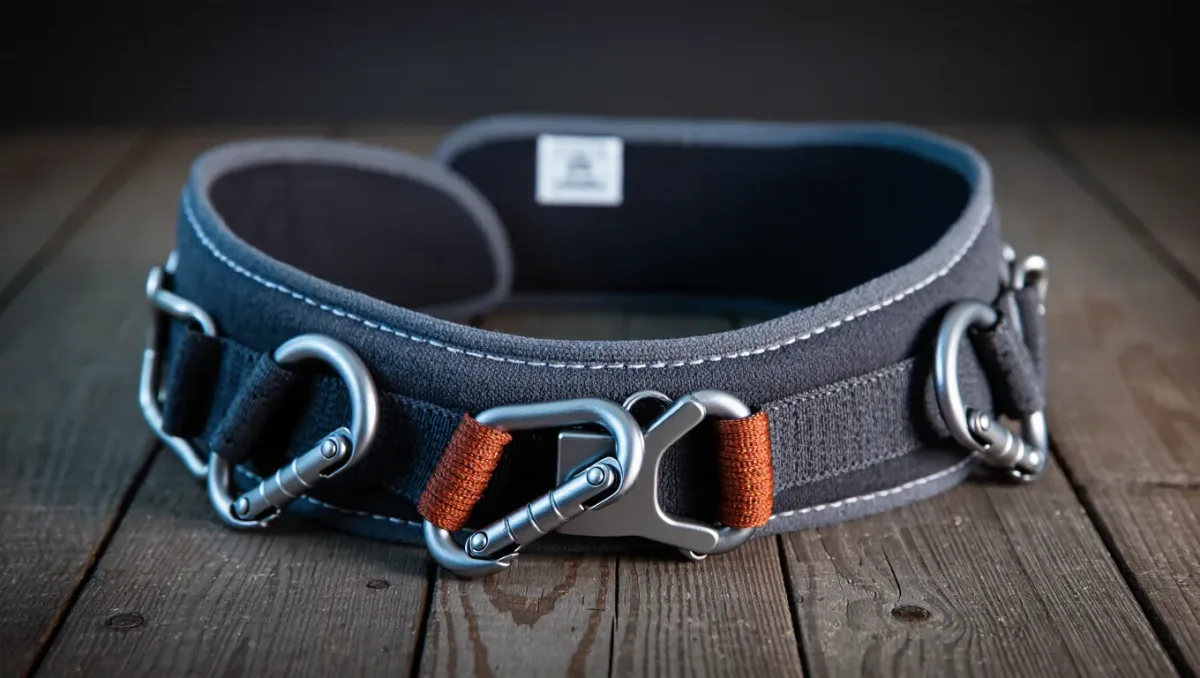
Choosing a climbing harness comes down to a certified sit harness — marked under the EN 12277 / UIAA 105 standards — in the right size for your waist and legs, with the features your climbing actually needs: four gear loops and adjustable leg loops for outdoor multipitch, a stripped-down alpine model for mountain routes, and a padded all-rounder for the gym-to-crag crowd. Every harness sold by the major manufacturers such as Petzl, Black Diamond, and Mammut lists its waist and leg-loop size range in centimeters and inches on the spec sheet, and that printed range — not the clothing size you wear — is the sizing that counts, per manufacturer fitting guidance.
This guide reads those documents so your purchase is an informed one: the types, the fit test, the certification marks, and the retirement rules. It publishes information, not instruction in the use of the equipment — manufacturers' user manuals govern how a harness is worn and loaded, and a qualified instructor or certified guide should teach your first sessions on the wall and the crag.
What types of harness are there?
Manufacturers sort harnesses into a few honest categories. All-round crag harnesses are the default: padded waistbelt and leg loops, four gear loops, ice-clipper slots, and a haul loop, in the roughly 300-400 gram range on most spec sheets. Alpine and mountaineering models strip padding and add adjustable leg loops so you can put them on over boots while wearing the harness all day, dropping weight toward and below 250 grams. Women's and gender-specific models change the rise and proportions rather than the engineering. Competition and gym harnesses go leaner still. And full-body harnesses — a distinct standard type — exist mainly for small children whose hips and body mass will not hold a sit harness upright in a fall, which is why climbing programs and manufacturer guidance specify them for kids, not adults.
How should a harness fit?
Snug, high, and hung. The waistbelt sits above the hip bones and cannot be pulled down over them when snugged — this is the single non-negotiable fit test, because a harness that rides below the hips can migrate in an inverted fall. Leg loops should allow a flat hand but not a fist. Do the fit test the way retailers and manufacturer manuals describe: hang in the harness, in a seated simulator if the shop has one, and check that the belt supports your weight without pinching and the loops hold without cutting circulation. Size ranges overlap between brands and even between a brand's models, so a medium in one harness is not a medium in another — measure your waist where the belt will ride and match it to the printed range.
| Type | Typical weight | Gear loops | Leg loops | Best for |
|---|---|---|---|---|
| All-round crag | About 300-400 g | 4 | Fixed or adjustable | Gym, sport, top rope, single pitch |
| Multipitch/crag trad | About 350-450 g | 4-5 | Adjustable | Long routes, full rack carry |
| Alpine/mountaineering | Under about 250 g | 2-4 | Adjustable | Glacier travel, alpine rock, packability |
| Full-body (type D class) | Varies | Varies | Integrated | Small children, specific programs |
Which features matter on the spec sheet?
Gear loops first: four is the standard number for multipitch trad, two is the gym-and-sport norm, and their stiffness matters more than the count — rigid loops rack gear faster, flexible loops pack under a jacket. Ice-clipper slots only matter if winter routes are on your list. A haul loop on the back earns its keep on big walls and for carrying a rope; auto-belay lanyard compatibility concerns gym climbers. Buckle systems are effectively settled — all major makers now use load-rated auto-locking waist buckles that cannot be double-backed wrong, while leg-loop buckles are where fixed-versus-adjustable gets decided. Materials and padding differ in comfort more than safety; every certified harness on the shelf holds the falls the standards require, and the differences you are paying for are weight, comfort, and features.
What do the certification marks mean?
Look for EN 12277 and/or UIAA 105 printed on the harness — the European and international safety standards for mountaineering harnesses, covering strength and construction, with a type letter (such as type C for sit harnesses, type D for full-body) marking the design class. The UIAA's version adds slightly stricter requirements in places, and both are printed in the user manual that ships with every compliant harness. No marking, no purchase — there is no context in which an uncertified harness is the right tool for belayed climbing.
When do you retire a harness?
Manufacturers publish retirement guidance in the user manual, and it is stricter than most climbers assume: a harness that has caught a hard fall, shows worn stitching, abrasion through the sheath, glazing or stiffness in the webbing, or any chemical or UV damage goes out of service immediately, and even a care-only harness has a service-life ceiling measured in years from first use — commonly cited as up to ten years maximum, with shorter life under regular use, per the manufacturers' care documents. Log your purchase date somewhere you will find it. Store it dry and out of sunlight, and retire anything whose history you cannot vouch for — used harnesses of unknown history are the classic bargain that is not one.
Fitting beats spec-sheet shopping: try the harness on and hang in it before you buy, and read the user manual that comes with it.
Frequently asked questions
Can one harness do gym, sport, and trad?
Yes — the padded all-round model with four gear loops and adjustable leg loops is the standard single-harness answer, and most makers position one or two models exactly there. Alpine and competition specialties are the upgrades you buy when the specific terrain becomes your regular terrain.
Do you need adjustable leg loops?
You need them for alpine and winter use, where the harness goes on over clothing and layers change through the day. For gym and warm-season cragging, fixed leg loops are lighter and cheaper, and comfort differences are minor once sized right.
How long does a climbing harness last?
Per manufacturers' published guidance: immediately after a major fall or visible damage, and at most around ten years from first use even with careful storage — far less with regular use. Treat the user manual's inspection checklist as the authority, and inspect the stitching before every session as the manuals instruct.