Alaska's national parks offer the wildest adventures in the American system, but most of them ask more of you than a parking spot and a trailhead. There are no entrance kiosks in the roadless parks. You fly in, you carry everything, and you plan around a short summer window. The reward is terrain on a scale you will not find anywhere else in the country: World Atlas notes that Alaska is the largest US state, bigger than Texas, California and Montana combined, and it holds North America's highest peak, Denali, at 20,310 feet.
Start by picking your style of trip. Some parks sit near roads and rail lines. Others, like Gates of the Arctic and Kobuk Valley in the Far North, have no roads or trails at all, according to World Atlas's regional breakdown. That difference shapes everything: your budget, your gear, your margin for error. This guide walks through access, trip options, wildlife basics, and timing.
Where are Alaska's national parks, and how do you reach them?
Alaska's parklands spread across five geographic regions, and their location tells you how hard they are to reach. World Atlas divides the state into the Far North, Interior, Southwest, Southcentral and Southeast, and parks cluster in the wildest of these. Gates of the Arctic, Kobuk Valley and Noatak National Preserve sit in the Far North, above the Yukon River, where the tundra climate keeps human settlement sparse.
The Interior holds Denali, the continent's high point. The Southwest holds Katmai, a landscape World Atlas describes as volcanic terrain on the Alaska Peninsula. Southcentral, the most populated region, holds the parks closest to Anchorage, where roughly half the state's residents live, per Wikipedia's Alaska entry. The Southeast panhandle is milder, maritime, and heavily forested, with the Tongass National Forest covering about 16.8 million acres.
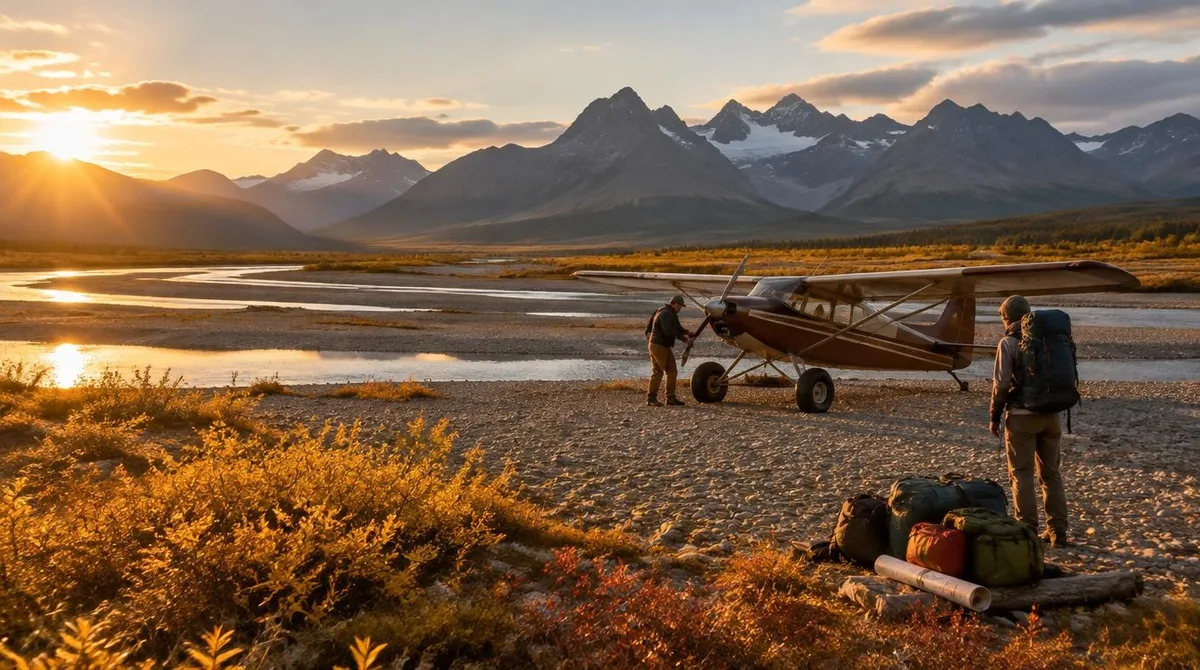
Access follows the same pattern. Road- and rail-served parks you can reach with a rental car or the Alaska Railroad. The rest require small aircraft, typically floatplane or ski-plane, and weather can ground flights without warning. Build slack days into any itinerary for a roadless park. If your flight in is delayed, you want a buffer, not a missed connection home.
What kinds of backcountry trips do the parks support?
Alaska's parks support a wider range of trips than most travelers expect, and the right choice depends on how much logistics you want to manage.
- Road- and rail-based basecamps. Parks reachable by car or train let you day-hike from a fixed base. This is the lowest-commitment way to see big country.
- Fly-in backpacking. In the roadless parks, a bush plane drops you and your party on gravel bars or tundra, and you navigate cross-country. There are no trails to follow in places like Gates of the Arctic, so map and compass skills matter. If contour lines are a closed book to you, read our guide to reading a topographic map before you commit.
- River trips. World Atlas counts more than 12,000 rivers across the state, feeding a network of glacial and clearwater waterways. Multi-day floats suit parties with boating experience and a solid exit plan.
- Bear and wildlife viewing. Katmai is famous for its brown bears. World Atlas also flags the McNeil River State Game Sanctuary nearby, where more than 100 bears may visit the area on a given day. Access there is limited and managed, so check current rules with the state before planning around it.
- Winter travel. Skiing, snowshoeing and dog sledding are real options, but winter trips are expert-level and demand serious cold-weather systems.
Guided options exist for most of these. A reputable operator handles the aircraft, the permits and the safety plan, which matters when the nearest road is a hundred miles off. Our checklist for choosing a trekking tour operator covers the vetting questions worth asking, and our breakdown of what guide fees actually cover helps you compare quotes.
What do you need to know about wildlife safety?
Wildlife safety in Alaska is mostly about bears, and it is a discipline, not a scare story. The parks with brown bear and black bear populations expect you to manage food and attractants properly. The standard kit includes bear-resistant food containers, which are required or strongly expected in much of the Alaska backcountry, and the knowledge of how to react to a defensive bear versus a predatory one. Get current, specific guidance from the managing park service for the park you are visiting; rules on food storage and bear deterrents vary by park and unit.
Moose deserve equal respect. They injure more people in Alaska than bears do, and a cow with calves in spring is the animal to give the widest berth. Wolves, wolverines and Dall sheep are generally shy. Coastal areas add a different consideration: tide timing and cold-water safety if your trip involves the ocean or big lakes.
The deeper point is self-reliance. In the roadless parks there is no cell coverage, no ranger station around the corner, and no quick evacuation. Parties should carry a satellite communicator, a real first-aid kit, and the skills to handle a member's injury or hypothermia for days, not hours. If your fitness or experience is thin, our multi-day trek training guide is a sensible place to start months out. This connects to our earlier piece, How to Train for a Multi Day Hike: How to Train for Your First Multi-Day Trek.
When is the best time to visit Alaska's national parks?
For most adventure travelers, the answer is the summer window, roughly June through early September, when days are long, aircraft fly reliably, and river levels and tundra travel are at their best. The exact sweet spot varies by park and by what you want. Early summer brings lingering snow at higher elevations and, in some years, more mosquitoes. Late August into September cools the air, thins the insects, and starts the color change on the tundra.
There is a second season worth considering: the aurora. World Atlas notes that the Northern Lights are visible across much of Alaska from late August to late April, with the Far North and the Interior near the Arctic Circle offering the best viewing, and Fairbanks among the top cities. Winter park travel pairs poorly with casual logistics, but a basecamp trip built around aurora viewing in the Interior is a realistic, memorable compromise.
Shoulder seasons cut both ways. May can be mud, brown snow and closed services. Late September can be spectacular and lonely, but aircraft schedules and visitor services contract fast. Whatever window you choose, confirm current conditions with the managing agency before you go; in Alaska, conditions change, and they change fast.
What should you sort out before you go?
The logistics list is longer than for a Lower 48 park trip, and each item earns its place.
- Confirm access. Identify whether your park is road-served or fly-in, and book aircraft and lodging early. Summer capacity in small Alaska towns is tight.
- Check permits and current rules. Backcountry permits, food-storage requirements and camp rules are set per park. Source them from the National Park Service or the relevant state agency, not from trip reports.
- Plan your navigation. In trailless parks, your route is your own. Carry paper maps and a compass alongside any GPS device, and know how to use both.
- Build a weather and delay buffer. Bush flights cancel for weather as a matter of routine. Pad both ends of your trip.
- Sort insurance and communications. A satellite messenger with two-way text and SOS is standard practice among Alaska backcountry travelers, and medical evacuation from remote terrain is expensive.
- Practice Leave No Trace at scale. In trailless tundra, impacts last decades. Travel on durable surfaces, pack out everything, and respect closures.
For a broader grounding in how these expeditions fit together, our adventure section covers route planning across terrains, and the planning hub holds the logistics primers that pair well with a trip this complex.
What this means for your trip
Alaska's national parks reward preparation more than any other parks in the country. The evidence points to a simple structure: pick a region that matches your experience, decide between road access and fly-in commitment, treat wildlife safety as a skill you practice rather than a warning you skim, and time your trip to the summer window or the aurora season. The scale of the place, the largest state in the union, with parklands from volcanic Katmai to the roadless Brooks Range, is the whole attraction. Meet that scale with a plan, check current conditions with the managing agencies before you travel, and the Last Frontier delivers what no other American park system can. For related coverage, see How to Train for a Multi-Day Backpacking Trip: An 8-Week Plan.